Quotes that assume you rip everything out
We audit what you own first. Working handsets and PRI lines often have years left in them.
From traditional on-premises setups to cutting-edge cloud VoIP systems, we deploy custom telephone networks that keep your team connected. We specialize in modernizing legacy

Most businesses do not need to throw out their phone system. They need someone who understands both the hardware on the wall and the cloud platform that could replace it, and who will say plainly which one is cheaper over five years.
Softphones for desktop and mobile, call center tools, visual voicemail, and vFax, all managed under one system.
We scope all three against how your calls actually move, then recommend one.
Local, toll-free and department lines port across. Nothing on your business cards changes.
ESI eSIP and Grandstream UCM estates are maintained and extended, not condemned.
Voice gets its own VLAN and QoS, with cellular or broadband failover where uptime matters.
We audit what you own first. Working handsets and PRI lines often have years left in them.
Voice traffic is separated onto its own VLAN with QoS, so a large upload cannot degrade a call.
Call flows are designed around your departments and the team is trained on the handsets they actually have.
We maintain legacy platforms while planning the migration, so there is no cliff edge.
Cloud VoIP and Hosted PBX Systems
including ESI eSIP Series, Grandstream UCM
Click-to-Call & Auto-Logging for cloud platform
Chosen per project, not per habit — the stack follows the problem.
We go through your phone bill, your handsets and your contracts, and tell you what each one is actually costing you.
Who answers first, what happens after hours, where a call goes when nobody picks up. Agreed on paper before we quote any hardware.
Your numbers are moved across and the new system is set up and tested while the old one keeps taking calls.
The changeover happens in the evening. The old system stays live as a backup until the new one has proven itself.
We show everyone how to use the handset in front of them, and you get an engineer on the phone rather than a ticket queue.
 Medical & Healthcare
 Hospitality & Tourism
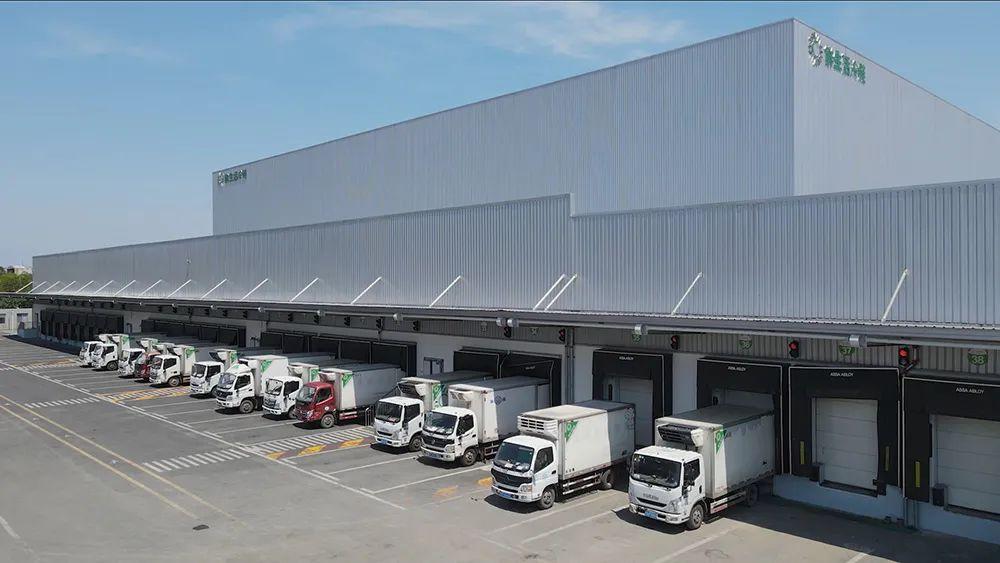 Transportation & Logistics
Strategy, design, engineering and support in one place. Nothing is handed to a third party.
You see something real in weeks. Progress is demonstrated, not described.
Documented, tested and yours. No lock-in to us as a vendor.
Four decades of keeping systems running, applied to the software layer too.
Start with one and move between them as the work changes.
Finding out what your current setup really costs
A new or replacement system on a set scope
Cloud phones with no capital outlay
Keeping an existing PBX supported and extended
On-premises systems host the physical PBX (Private Branch Exchange) hardware directly inside your building’s server room, giving you full control but requiring dedicated IT maintenance and high initial hardware costs. Cloud systems host everything over the internet on the provider’s remote servers, removing hardware footprints and shifting expenses to a predictable per-user monthly subscription.
A hybrid system combines local on-premises hardware with modern cloud features. This allows businesses to protect their initial investments in expensive desk phones or local PRI lines while gaining access to cloud perks like mobile routing, remote team chats, and AI call transcription tools.
Yes. Providers like SkySwitch support number porting, allowing you to legally transfer all established local, toll-free, and internal department phone lines over to your new platform layout.
Internet access is absolutely critical for cloud phone systems. While a standard call only consumes roughly 100kb of bandwidth, high volume can slow down non-optimized channels. Top providers suggest using high-speed fiber lines paired with a backup cellular (4G/5G) or broadband internet line to keep calls active during primary network outages.
Pure cloud architectures run directly via softphones on computers or mobile apps, requiring nothing more than a standard headset. If you prefer physical desk phones, you can use pre-programmed IP phones (such as Poly, Grandstream, ESI or Yealink models). For legacy hardware like old fax machines, an Analog Terminal Adapter (ATA) is needed to bridge them into the system.
It usually tells us more in two minutes than a discovery call does in an hour — what you are paying for, what you are not using, and whether a change is worth making at all.